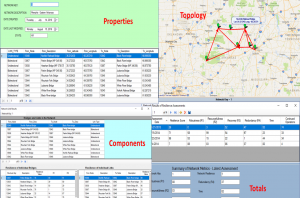
Decision Making Toolchest (DMT) is developed in .NET environment using latest technologies. DMT uses big data along with built-in predictive analytical models to provide bridge management recommendations based on owner-defined thresholds and feasible actions to infrastructure owners through visual dashboards. Data set in this project includes bridge properties, current and past visual inspections, sensor data, structural analysis models such as Finite Element Models, Wheel Impact Load detector (WILD) data, and management metrics. Microsoft SQL Server – a relational database – is used as a reliable data repository that links structural analytical models to physical bridge components; sensors to physical bridge components; and results to related components. DMT includes user friendly input screens, allowing users to add or manipulate data that is stored back into a data repository. Analysis in DMT can be done at three different levels – Network, Bridge, and Component levels. Analysis results are presented in a tabular or graphical form making it easy to understand.
Network Level
DMT incorporates a resilience model at the network level. A Resilience model depends on robustness, resourcefulness, recovery, and redundancy, which is computed using sensing information, visual inspection, and other objective/subjective data in the form of resilience issues stored in the central repository. Selected network topology and its resilience assessments provide infrastructure owners the ability to reduce the magnitude and/or duration of disruptive events.